10 ways to maintain social circles in later life
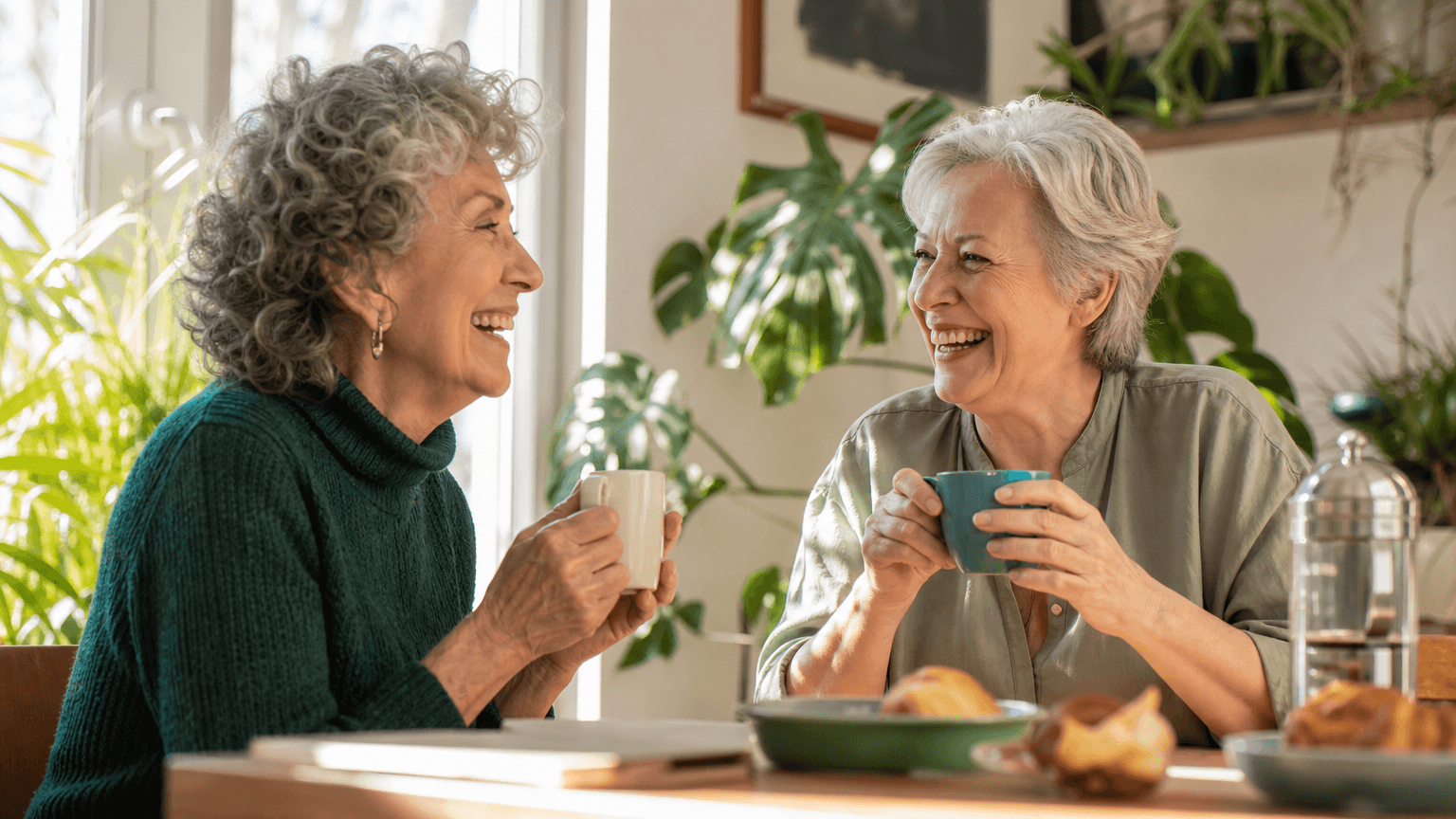
Watching a social circle shrink with age is one of the quieter losses of later life, and it is far more common than most people admit out loud. Retirement, bereavement, hearing loss, reduced mobility and moving home can all thin out the everyday contact that once happened without effort. The ten approaches below look at what actually helps: how to protect existing ties, rebuild new ones, and remove the practical barriers that quietly push people out of social life.
Name what changed in your social life
Before trying to fix anything, it helps to describe precisely what was lost. Social circles rarely collapse all at once; they erode through specific, identifiable events. A workplace that supplied twenty casual conversations a day disappears at retirement. A spouse who organised birthdays and phone calls dies, and with them goes the household's social secretary. A driving licence is surrendered, and suddenly the Saturday gathering across town is out of reach. Writing down which contacts faded and why turns a vague sense of loneliness into a set of concrete, addressable problems.
This matters because loneliness and social isolation are not the same thing, and they call for different responses. The World Health Organization distinguishes between objective isolation, meaning a genuinely small network and low contact frequency, and loneliness, the painful gap between the relationships a person wants and the ones they have (WHO, 2021). Someone can be surrounded by carers and neighbours and still feel unseen; another person may have few contacts but feel content with them. Naming your own pattern prevents wasted effort, since filling a diary with acquaintances does little for a person who is grieving one specific irreplaceable relationship.
A practical way to start: list ten people you spoke with regularly five years ago, and mark next to each what changed, whether they died, moved, became unwell, or simply drifted. Then mark which losses are structural, meaning they need a new arrangement such as transport or a new venue, and which are dormant, meaning the person is still alive and reachable and the connection simply stopped being maintained. Dormant ties are usually the fastest thing to revive, because the shared history is already there and no new relationship has to be built from nothing.
Turn contact into a fixed weekly rhythm
Spontaneous contact is largely a by-product of shared structure. Colleagues, school gates and commutes generate encounters without anyone planning them, and when those structures end the contact does not simply relocate, it stops. The replacement is deliberate rhythm: the same call on the same evening, the same coffee on the same weekday, the same class every Tuesday morning. Regularity does the work that circumstance used to do.
Recurring commitments also lower the psychological cost of reaching out. A one-off invitation requires a decision, an assessment of whether you are imposing, and the risk of a refusal; a standing arrangement requires none of these, because the default is that it happens. The National Institute on Aging notes that scheduling regular contact and building activity into the week are among the practical steps that help older adults stay connected rather than waiting for connection to arrive (NIA, 2021). Research using WHO survey data across multiple countries also found that patterns of ongoing social engagement, rather than isolated contacts, were associated with better subjective wellbeing and healthier behaviours among older adults (Luo et al., 2020).
To apply it, choose three anchors rather than a full diary: one recurring conversation, one recurring outing, and one recurring group. Write them into a visible calendar and treat them as appointments that are kept even on flat days, because low mood is precisely when the anchor is most useful and least appealing. If a slot is missed, restore it the following week rather than treating the lapse as evidence that the arrangement has ended. It also helps to hold the arrangement lightly enough that it can move venue or format, for example from a walk to a phone call in bad weather, so that the rhythm survives when the details cannot.
Treat hearing and vision as social tools
Sensory decline is one of the most underestimated drivers of social withdrawal, partly because it operates so gradually. When following a conversation in a noisy café takes intense concentration, when jokes land a half second late and questions have to be repeated, the meal stops being a pleasure and becomes work. People rarely announce that they are withdrawing because of their hearing; they say the restaurant is too loud, that they are tired, that they did not fancy it. Over months this becomes a pattern of quiet refusals that shrinks the circle without anyone naming the cause.
Addressing sensory function is therefore a social intervention, not only a medical one. A longitudinal study of older adults found that hearing aid use among people with hearing impairment was associated with better outcomes across domains including social engagement and mental health, compared with those with untreated hearing loss (Dawes et al., 2015). Similarly, mobility and functional limitations shape how much older adults participate in social life, because impairment restricts the range of settings a person can comfortably reach and take part in (Rosso et al., 2013). The same logic applies to vision: unread menus, unrecognised faces across a room and abandoned reading groups all erode contact.
Practically, this means arranging regular hearing and eye checks rather than waiting for a crisis, and persisting through the awkward adjustment period when devices feel strange or amplify the wrong sounds. It also means shaping environments: choosing quieter venues and corner tables, sitting with your back to a wall and your better ear toward the group, asking for the music to be turned down, and telling friends plainly what helps, such as facing you when they speak. Most people respond well to a direct request, and a single sentence explaining what you need is far less isolating than repeatedly declining invitations.
Protect mobility so leaving home stays easy
Social life in later years often depends on something that has nothing to do with personality or willingness: the physical ability to get out of the front door and back again. Walking speed, balance, joint pain, fear of falling and access to transport quietly determine how often someone shows up to a coffee morning, a family meal or a neighbour's birthday. Research on older adults has found that mobility limitations are closely tied to reduced social engagement, meaning that the shrinking of a social circle is sometimes less a matter of losing interest and more a matter of losing reach (Rosso, Taylor, Tabb, & Michael, 2013).
The mechanism is cumulative rather than dramatic. A person hesitates about a long walk to the bus stop, so they skip one gathering; the invitations thin out; confidence about being out in public erodes; and within a year the default answer to any invitation has become no. Because the World Health Organization identifies social isolation and loneliness among older people as a widespread public health concern with real consequences for physical and mental health, treating mobility as a social issue rather than only a medical one is a meaningful shift in perspective (World Health Organization, 2021).
Practically, this means protecting the small things that keep going out feasible. Have vision and gait checked when walking feels less steady, use a stick or walker without treating it as a defeat, and choose supportive footwear that makes uneven pavements less threatening. It also helps to map the social environment realistically: pick meeting places with seating, accessible toilets and short walking distances, arrange lifts or shared taxis in advance rather than deciding on the day, and build in strength and balance activity that keeps stairs and kerbs manageable. When mobility genuinely cannot improve, the answer is to move the meeting rather than cancel it, hosting at home or choosing venues that come to the person.
Join activities built around a shared purpose
There is a difference between events designed for socialising and activities that happen to be social. Many people find open-ended conversation with strangers exhausting or awkward, particularly after a bereavement or a move. Activities with a shared purpose, a choir preparing for a performance, a community garden, a volunteering rota, a study group, a walking club with a route to finish, give people something to look at other than each other, and a reason to return next week that does not require anyone to declare a friendship.
This structure matters because engagement in social activities appears to be linked with better outcomes over time. In a longitudinal community study, older adults who took part in social activities showed a slower progression from mild to severe cognitive impairment, suggesting that regular, meaningful participation carries value beyond enjoyment alone (Hughes, Flatt, Fu, Chang, & Ganguli, 2013). International survey data similarly link patterns of social engagement with healthier behaviours and greater subjective wellbeing in older adults, which points to activity groups as a channel for several benefits at once rather than a single one (Luo, Ding, Bauman, Negin, & Phongsavan, 2020).
In applying this, prioritise repetition over novelty. A group that meets at the same time every week builds familiarity far faster than a series of one-off outings, because relationships in later life are usually formed by repeated low-pressure exposure rather than by instant connection. Choose something aligned with an existing skill or curiosity so that competence carries the early awkwardness. Give any new group at least four or five sessions before judging it, since the first visit almost always feels alienating. And if a physical activity is not possible, purpose can come from a role: taking minutes, making phone calls to members who missed a session, or teaching what you already know.
Keep intergenerational relationships alive
A social circle made up entirely of peers is vulnerable in a way that a mixed one is not. Illness, relocation and bereavement remove contemporaries over time, and if all of a person's regular contact sits within one age band, each loss cuts deeper into the whole network. Intergenerational ties, adult children and grandchildren, younger neighbours, colleagues from a former workplace, people met through volunteering or a place of worship, spread that risk and add different rhythms of contact into the week.
These relationships also work differently at a psychological level. Contact with younger people tends to bring new information, technology, humour and news of the wider world, which counters the narrowing that can accompany a shrinking routine. Being useful to someone younger, through practical help, childcare, mentoring or simply listening, restores a sense of contribution that retirement often removes. Guidance from the National Institute on Aging emphasises staying connected through family, community activity and helping others as a core strategy against isolation, and intergenerational contact delivers several of these at once (National Institute on Aging, 2021).
To keep these ties alive, avoid making them dependent on the younger person's initiative, which tends to fluctuate with their work and family pressures. Set a predictable, low demand pattern instead: a standing Sunday call, a shared interest that gives you something specific to talk about, a message about something you know they care about. Learn enough of whatever platform they actually use, whether that is video calling or a messaging group, so that contact does not require them to switch to your preferred channel. Ask about their lives with genuine curiosity rather than only reporting your own news, and where possible create a role for yourself that they value, such as being the person who remembers the family stories or teaches a practical skill that is no longer commonly taught.
Use technology as a bridge, not a substitute
Video calls, messaging groups and voice notes are best understood as connective tissue between face to face meetings rather than a replacement for them. A weekly video call with a grandchild who lives abroad, a family group chat that carries photos and small updates, or a shared calendar reminder to phone a friend on Sunday mornings all keep relationships warm during the long gaps when meeting in person is not realistic. The National Institute on Aging (2021) explicitly lists staying in touch through technology among the practical ways older adults can protect themselves against isolation, particularly when distance, weather or health limits travel.
The reason this works has less to do with the technology itself and more to do with frequency and predictability. Relationships thin out not because of one dramatic rupture but through the slow disappearance of small contacts, and digital tools restore those small contacts cheaply. Social engagement, in its broader sense of maintaining regular contact and participation, is consistently associated with better subjective wellbeing among older adults across very different countries and income levels (Luo et al., 2020). The caution is that passive scrolling is not engagement. Watching other people's lives without any exchange can leave someone feeling more on the outside than before, so the aim is two way contact: a reply, a question, a plan.
Practically, keep the setup ruthlessly simple. Choose one platform the people you care about already use rather than several, put the three or four most important contacts on a home screen or as speed dial, and enlarge text and turn up ringtone volume so that missed calls stop happening. Ask a family member for a single teaching session and write the steps on a card kept next to the device. Then anchor the technology to a real rhythm: same day, same time, same person, so the call becomes an appointment rather than something that depends on someone remembering. Where possible, use digital contact to arrange physical contact, for example ending a video call by fixing a date for coffee, because the World Health Organization (2021) frames interventions against isolation as needing to build genuine social connection rather than mere contact.
Rebuild routine after retirement or bereavement
Much of adult social life is carried invisibly by structure. Work provides daily colleagues, a shared canteen and a reason to leave the house; a spouse often provides the social diary, the phone calls to friends and the invitations that arrive as a couple. When either disappears, the friendships themselves may still exist, but the scaffolding that produced regular contact is gone. This is why so many people describe feeling socially adrift within months of retiring or being widowed even though nobody has actually fallen out with them. The World Health Organization (2021) identifies these life transitions, including retirement, bereavement and loss of role, among the circumstances that leave older people vulnerable to social isolation and loneliness.
Rebuilding routine works because it moves connection out of the realm of motivation, which is unreliable during grief or major transition, and into the realm of habit. A fixed Tuesday class, a Thursday walking group, a standing Friday phone call and a monthly lunch create contact that happens whether or not you feel like initiating it on a given day. Regular participation in social activities is associated with meaningfully different trajectories in later life, including in cognitive terms; in one community based study, older adults who engaged more in social activities showed slower progression from mild to more severe cognitive impairment (Hughes et al., 2013). Structure also protects against the drift into staying indoors that tends to make each subsequent outing feel harder.
A workable approach is to rebuild the week deliberately rather than waiting for it to fill itself. Map out the seven days and aim to place two or three fixed commitments outside the home, ideally spread across the week rather than clustered, plus one recurring call or visit. Reinstate contacts that were mediated by someone else, for example telephoning your late partner's friends directly, or asking a former colleague to keep meeting for the coffee you used to have at work. Expect a period where nothing feels enjoyable, especially during bereavement, and judge success at first by attendance rather than pleasure. If a chosen activity turns out to be a poor fit, treat it as information about what to try next rather than as evidence that socialising no longer works for you.
Contribute through volunteering and helping roles
Volunteering, mentoring, helping at a community centre, tutoring, serving on a residents' committee or supporting a faith group all create a particular kind of social tie: one built around a shared task and a role, not around small talk. For many people this is far easier than trying to make friends directly, because conversation arises naturally from the work being done and there is an obvious reason to return next week. It also restores something that retirement often removes, which is the experience of being needed and of having a place where absence would be noticed.
The mechanism is partly structural and partly psychological. A helping role provides regular, scheduled contact with a stable group of people, which is exactly the sort of participation associated with better subjective wellbeing and healthier behaviours among older adults internationally (Luo et al., 2020). It also involves the kind of cognitively and socially demanding activity linked with more favourable cognitive trajectories in later life (Hughes et al., 2013). Beyond that, contributing counters the quietly corrosive sense of being a recipient of care rather than a participant, and the World Health Organization (2021) emphasises meaningful social participation and valued roles for older people as central to reducing isolation rather than simply arranging activities for them to attend.
To apply it, start from skills and interests you already have rather than from whatever vacancy exists: decades of experience in bookkeeping, teaching, gardening, cooking, sewing or telephone work all translate into useful roles. Begin with a small, time limited commitment, perhaps two hours a week for a trial period, so that the decision feels reversible. Be honest with the organisers about physical limits, hearing needs or the days you cannot travel, since most will adjust tasks rather than lose a reliable volunteer. Telephone befriending schemes, where you call someone else regularly, suit people whose mobility is limited, and informal contributions count too: helping a neighbour with paperwork, minding grandchildren once a week, or coordinating a building's noticeboard. The National Institute on Aging (2021) lists volunteering and taking on activities that give a sense of purpose among the practical steps for staying connected.
Ask for help before isolation becomes settled
Most people wait far too long to say anything about loneliness. There is a common assumption that social contact should happen naturally, and that needing to ask for it is somehow an admission of failure. In practice, isolation in later life is usually a structural problem rather than a personal one: it grows out of retirement, bereavement, illness, sensory loss and the disappearance of the daily settings where contact used to happen by itself (World Health Organization, 2021). Asking for help early means naming the situation out loud, to a family member, a neighbour, a family doctor, a community worker or a religious leader, while the social threads are thin but not yet broken.
Timing matters because isolation tends to consolidate. The longer a person goes without regular contact, the more effort each interaction seems to require, and the easier it becomes to decline the next invitation. Confidence, conversational rhythm and even the practical habits of getting ready and leaving the house all erode with disuse. Social engagement is closely tied to mobility, health behaviours and subjective wellbeing, and these factors reinforce one another in both directions, so an early intervention in one area can slow decline across several (Luo et al., 2020; Rosso et al., 2013). Reaching out at the stage of feeling that the week is a little too quiet is far more effective than reaching out after a year of near total silence.
A practical way to do it is to make the request specific and small. Instead of saying nothing, or saying something as large as I am lonely, it often helps to ask for one concrete thing: a standing phone call on Sunday evenings, a lift to a community centre on Tuesdays, help finding out what runs locally, or an introduction to one neighbour. Health professionals are a legitimate place to raise this too, since loneliness affects physical and mental health and may point to treatable contributors such as hearing loss, depression, pain or medication side effects. National guidance for older adults explicitly encourages talking to a doctor or a trusted person about feelings of isolation and asking about local programmes, transport services and volunteer opportunities as a route back into contact (National Institute on Aging, 2021).
Frequently asked questions
Work supplies a large amount of unplanned, repeated contact: colleagues you see daily without having to organize anything. When that structure disappears, many of those relationships fade because nobody was maintaining them deliberately, and later life often brings other losses too, such as bereavement, relocation, and reduced driving or walking capacity (WHO, 2021). Research on older adults shows that mobility limitations in particular predict lower participation in social activities outside the home (Rosso et al., 2013). The shrinkage is usually a matter of circumstances rather than a sign that someone has become less likeable or less interesting.
No, although the two often overlap. Social isolation describes an objective situation: few contacts, little participation, a small network. Loneliness is the subjective distress of feeling that your relationships fall short of what you want, which is why a person can be lonely in a crowded family home and content living alone (WHO, 2021; National Institute on Aging, 2021). The distinction matters practically, because isolation is usually addressed by adding opportunities for contact, while loneliness often needs greater depth or meaning in the contact that already exists.
Conversation is cognitively demanding: it draws on attention, language, memory, and reading other people's intentions, all at once and in real time. Longitudinal work following older adults with mild cognitive impairment found that higher engagement in social activities was associated with slower progression to more severe impairment (Hughes et al., 2013). Social participation also tends to travel with other protective behaviors such as physical activity and better subjective wellbeing (Luo et al., 2020). This is an association rather than proof of cause, and staying socially active is not a way to prevent or treat any disease.
Yes, and it is one of the most under recognized reasons older adults pull back. When following a group conversation becomes exhausting and mishearing feels embarrassing, people quietly start declining invitations, and the withdrawal is often mistaken by relatives for disinterest or low mood. A long term study of older adults found that hearing aid use among people with hearing loss was associated with better outcomes across domains including social engagement and mental health (Dawes et al., 2015). Alongside any hearing assessment, small environmental changes help: quieter venues, seating with light on the speaker's face, and smaller groups.
The most useful help is practical and specific rather than general encouragement: offering a lift, making the phone call that arranges the first visit, setting up a video call so it works without troubleshooting, or going along the first time to a new group (National Institute on Aging, 2021). It also helps to protect the person's role as a giver, not only a receiver, by asking for their advice, their recipes, their memories, or their help with something real. Regular short contacts, a brief call at a predictable time, usually sustain connection better than rare long visits. Approach it as removing obstacles rather than managing someone's life, since autonomy is itself part of wellbeing.
Mobility limitations are strongly linked to reduced social engagement, so the practical goal is to lower the physical cost of contact rather than to demand more effort (Rosso et al., 2013). That can mean bringing the meeting home, a standing coffee visit, a small study group, a shared meal, and using phone or video contact as a genuine relationship, not a consolation prize. It also means addressing the barriers themselves: appropriate walking aids, accessible transport options, seating and toilet access at destinations, and choosing venues that require the least walking. Discussing mobility and its effect on daily life with a health professional is worthwhile, since some obstacles are more modifiable than they first appear.
There is no evidence based number, and treating it as a target tends to create pressure rather than connection. What research points to is the value of regular, meaningful participation and the subjective sense that one's relationships are sufficient, which varies enormously between individuals (Luo et al., 2020; WHO, 2021). A useful personal test is whether you have someone to talk to when something matters, someone who would notice if you disappeared for a week, and some contact that is enjoyable rather than dutiful. For some people that is two relationships and for others it is twenty.