Resilience Meaning and Examples: 10 Ways It Shows Up in Real Life
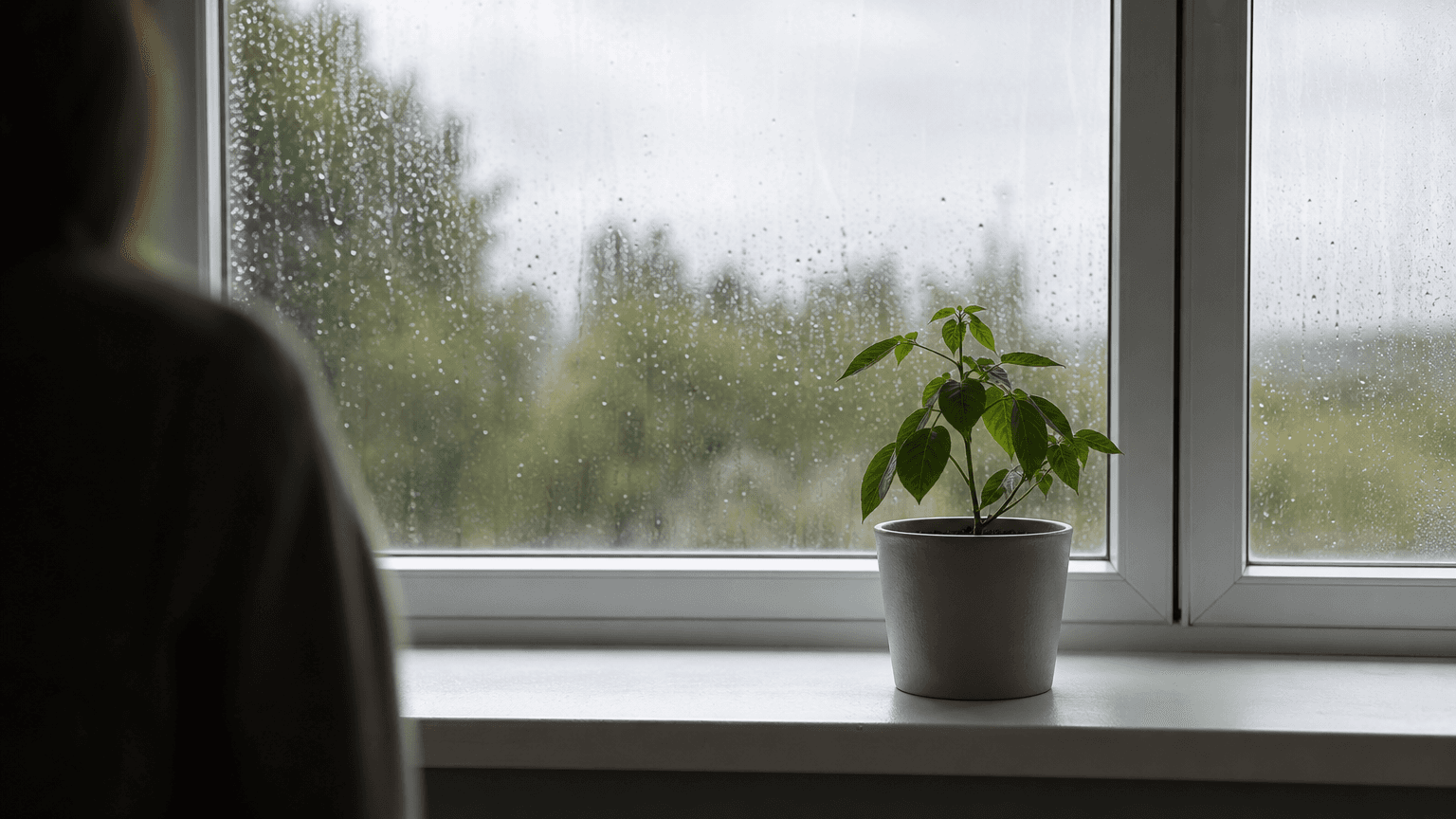
Most people wonder at some point whether they are handling life "well enough," especially after a loss, a health scare, a job upheaval or a long stretch of ordinary stress. Resilience is the word researchers use for what happens next: not the absence of pain, but the capacity to keep functioning, adapt and sometimes grow through it. This article explains what resilience actually means in psychological research and then walks through ten concrete examples of what it looks like in real situations.
Staying functional during a long, grinding stressor
Some adversity arrives as a single blow, but much of it arrives as a slow drip: caring for an ageing parent, a restructuring at work that drags on for months, a chronic illness in the family, financial pressure that never quite resolves. Resilience in this context is not a heroic recovery moment. It is the pattern of continuing to sleep reasonably, keep commitments, stay connected to people and maintain a workable mood while the stressor is still switched on. Researchers who follow people over time increasingly define resilience exactly this way: as mental health outcomes that hold up better than you would predict given the actual load of stressors a person is carrying, rather than as a fixed personality trait someone either has or lacks (Kalisch et al., 2021).
This outcome oriented view matters because it explains why resilience can look unimpressive from the outside. Two colleagues may face the same reorganisation; one reports steady sleep and stable functioning, the other reports rising anxiety. The difference is not that the first person cares less. It reflects processes such as how they appraise the situation, whether they can locate anything within their control, and what support they can draw on. Reviews of the resilience literature note that these are dynamic processes unfolding over time rather than static qualities, which is precisely why the same person can cope well with one prolonged stressor and struggle with another (Sisto et al., 2019).
Practically, this means tracking function rather than feelings alone during a long stressor. Ask concrete questions weekly: Am I still eating and sleeping in a recognisable rhythm? Am I still returning messages from people who matter? Am I still doing one thing that is not about the problem? If several of those slip at once, that is useful information, not failure. It also helps to reduce the load where the load is genuinely reducible, delegating or postponing what can be postponed, because resilience research consistently frames the stressor exposure itself as one half of the equation, not just the person's response to it (Kalisch et al., 2021).
Recovering physically after surgery or illness
Resilience is often described in emotional terms, but it has a physical dimension that clinicians study directly. Physical resilience refers to how well a person withstands or bounces back from a health stressor such as major surgery, a fracture, an infection or a hospital stay. Two people of similar age with similar diagnoses can follow very different trajectories, one returning to walking, cooking and social life within weeks, the other losing independence that never fully returns. Researchers have argued that this variability is a construct in its own right, distinct from simply being free of disease, and that it helps explain why identical medical events produce such divergent outcomes (Whitson et al., 2016).
What drives the difference is partly biological reserve and partly psychological and behavioural. Studies of rehabilitation after joint replacement have found that modifiable psychological factors, including expectations, mood and confidence in one's ability to manage recovery, are associated with how patients progress, which raises the possibility of tailoring rehabilitation pathways to psychological risk and resilience profiles rather than treating all patients identically (Ditton et al., 2020). In other words, the mind is not decorative in physical recovery. It shapes whether someone does the uncomfortable exercises, reports problems early, and keeps moving when movement hurts.
Applying this looks unglamorous. Set recovery goals that are functional rather than abstract, such as walking to the end of the street or managing the stairs once a day, because function is what physical resilience is actually measured against (Whitson et al., 2016). Expect a non linear curve and plan for setback days in advance so they do not read as proof of failure. Keep the people who help you moving, whether that is a physiotherapist, a walking companion or a neighbour who checks in, since social and behavioural supports are among the levers that can realistically be adjusted during rehabilitation (Ditton et al., 2020).
Adapting after trauma when symptoms linger
A common misconception is that resilience after trauma means being untouched by it. In reality, many people who go on to function well still carry intrusive memories, heightened startle, sleep disruption or periods of avoidance. Resilience here means the trajectory: symptoms that gradually loosen their grip on daily life, or a life that gradually widens around symptoms that remain. Researchers examining post traumatic stress have proposed treating resilience as a meaningful clinical endpoint rather than focusing only on symptom counts, in part because the neurobiological and psychological processes involved in recovery are not simply the mirror image of the processes that produce illness (Rakesh et al., 2019).
This distinction has practical weight. If you define success only as the disappearance of symptoms, every difficult anniversary or triggering news story reads as relapse. If you define it as restored capacity, you can notice that you attended the family gathering, drove the route you had been avoiding, or slept through the night more often this month than last. This is also where the growth dimension of resilience appears. Some people report shifts in priorities, closer relationships or a clearer sense of meaning after adversity, and the broader literature describes resilience not only as maintaining function but as adapting and, for some, developing through the experience (Sisto et al., 2019).
In practice, adapting after trauma usually means small, repeated approach steps rather than one decisive confrontation, ideally with professional guidance when symptoms are persistent or disabling. Rebuild the ordinary scaffolding first, since sleep, routine and connection support the underlying regulation that recovery depends on. Then reclaim territory in graded increments, and treat setbacks as data about pacing rather than verdicts about you. Accepting that circumstances have changed while continuing to act toward what still matters is a core theme in guidance on building resilience, alongside maintaining relationships and keeping a longer term perspective (American Psychological Association, 2012).
A child who thrives despite a hard start
One of the oldest and most studied images of resilience comes from developmental research: a child who grows up amid poverty, family instability or chronic adversity and still reaches adulthood able to work, love and cope. This is the classic sense in which the concept entered psychology, describing positive adaptation despite significant risk rather than an easy life. Reviews of the literature note that resilience has been conceptualised in several ways, as a stable personality trait, as an outcome visible after adversity, and as a dynamic process of adapting over time, with the process view now dominant (Sisto et al., 2019).
Why does one child fare better than another with a similar start? The research points less to extraordinary inner toughness and more to accumulating protective conditions: at least one dependable adult relationship, opportunities to build competence, and a growing sense that one's own actions matter. Resilience in this sense is understood as multidimensional, shaped by individual characteristics, family context and wider community resources acting together rather than by any single heroic quality (Sisto et al., 2019). Importantly, thriving here does not mean the adversity left no mark. Many such children carry grief, hypervigilance or difficulty trusting, and still function, contribute and grow.
The practical takeaway applies well beyond childhood. If you are supporting a young person through a hard period, the most evidence aligned thing you can offer is consistency: showing up predictably, naming what happened honestly at an age appropriate level, and protecting spaces where they can experience mastery, whether that is sport, music, cooking or caring for an animal. If you are the adult looking back at your own hard start, it can help to inventory what actually carried you: which people, routines and beliefs functioned as protective factors, since those same ingredients often remain available to you now.
Reframing a setback at work without denying it
A project you led is cancelled, you are passed over for promotion, or a restructure removes your role. The resilient response is not cheerfulness and it is not pretending the loss is a hidden blessing. It is the slower work of appraising the event accurately: separating what genuinely happened from the catastrophic story your mind writes about what it means for your competence, your future and your worth. The American Psychological Association describes changing how you interpret and respond to stressful events, alongside accepting that change is part of living, as central to how people build resilience (American Psychological Association, 2012).
Mechanistically, this matters because appraisal drives the intensity and duration of the stress response. Researchers studying resilience as a process across repeated stressors argue that resilience is best understood as maintaining or recovering mental health relative to the actual stressor load a person is carrying, which means the same job loss can be a moderate or severe stressor depending on context and on how it is processed (Kalisch et al., 2021). Reframing is not about deciding the setback was fine. It is about downgrading global conclusions such as "I am not good at this" into specific, testable ones such as "this proposal did not fit this budget cycle," which leaves room for problem solving instead of shutdown.
In practice, try writing the event in two columns: the verifiable facts on one side, the interpretations on the other. Then interrogate the interpretations as you would a colleague's, asking what evidence supports them, what evidence contradicts them, and what a fairer summary would be. Allow the disappointment its space first, because reframing attempted too early tends to collapse into suppression. Then pick one concrete next action, such as requesting specific feedback or updating a skills plan, since resilience research consistently emphasises decisive action over avoidance when problems are approachable (American Psychological Association, 2012).
Leaning on relationships instead of going it alone
A person facing a serious diagnosis tells three friends rather than none, accepts the offer of lifts to appointments, and lets one family member sit with the fear without trying to fix it. This looks unremarkable, but it is one of the most reliably supported expressions of resilience in the research. Guidance on building resilience places connection first, emphasising trustworthy relationships that accept and support you, and participation in groups that provide social belonging and practical help (American Psychological Association, 2012).
Social support works through several channels at once. It offers instrumental help that reduces the objective load of a stressor, it provides alternative appraisals that interrupt rumination, and it appears to influence the biological stress systems involved in adaptation. Work examining resilience as a treatment target in post traumatic stress disorder describes resilience as an active, modifiable process involving neurobiological and psychosocial factors rather than a fixed trait, with social and environmental influences among the elements that shape how people recover after trauma (Rakesh et al., 2019). In other words, other people are not a consolation prize when personal coping runs out. They are part of the coping system itself.
Applying this usually means being more specific than "let me know if you need anything." Ask for defined help: a weekly phone call, someone to take notes at a medical appointment, a neighbour to collect the children on Thursdays. Distinguish between people who are good at practical logistics and people who are good at sitting with distress, and use each accordingly, because expecting one person to be both is how support networks quietly break. If your instinct is to withdraw when things are hard, treat one small act of contact as the target rather than emotional openness, since contact tends to precede disclosure rather than the other way round.
Growing new meaning and priorities after adversity
Resilience is not only about returning to how things were. For many people, a hard chapter ends with a rearranged sense of what matters: a person who survived a serious illness stops tolerating a job that drains them, a bereaved parent starts volunteering with families in similar circumstances, someone who went through a divorce discovers they value honesty in friendship far more than social convenience. Definitions of psychological resilience have gradually widened from simple bounce back language to include this developmental dimension, the possibility of positive adaptation and personal change in the aftermath of significant adversity (Sisto et al., 2019). Growth in this sense is not a reward for suffering and it does not cancel the loss. It is what can happen when a person is forced to rebuild assumptions about themselves and the world, and rebuilds them differently.
The mechanism is largely about appraisal, the way a person interprets what happened and what it means going forward. Resilience research increasingly frames outcomes as the product of how stressors are evaluated and reframed over time rather than as a fixed personality trait, which is why the same event can leave two people with very different long term narratives (Kalisch et al., 2021). When someone can locate something intelligible in an experience, a lesson, a value, a strengthened relationship, a clearer boundary, the memory becomes less of an unprocessed threat and more of a chapter with a place in their story. The American Psychological Association similarly describes purpose, self discovery and revised goals as part of how people move through difficulty rather than as an optional extra (American Psychological Association, 2012). Importantly, this is a slow process; pushing for meaning too early, or having it pushed on you by others, tends to feel hollow or invalidating.
In practice, meaning making usually starts small and retrospectively. You might write for ten minutes about what the past year asked of you and what you now know that you did not know before, without forcing a silver lining. You might notice which activities, people or commitments felt genuinely important during the worst weeks and which quietly fell away unmissed, then treat that as data about your priorities. Concrete steps help more than abstractions: one changed commitment, one conversation you have been avoiding, one hour a week given to something that now matters. And if nothing meaningful has surfaced yet, that is a normal stage rather than a failure of resilience (Sisto et al., 2019).
Frequently asked questions
Resilience is the capacity to adapt well in the face of adversity, stress, trauma or significant sources of pressure, and to keep functioning in line with what matters to you (American Psychological Association, 2012). It is not a fixed trait you either have or lack, but a dynamic process that unfolds over time as a person interacts with stressors and with the resources around them (Sisto et al., 2019). Importantly, resilience also includes a growth dimension: many people do not simply return to how they were before, they develop new skills, priorities and perspectives through the struggle itself.
Imagine someone made redundant after a decade in the same role. They feel shock, anger and shame, they tell a couple of trusted friends rather than isolating, they keep a basic daily rhythm of sleep, movement and meals, and after a few weeks they start reframing the loss as a chance to move into work that suits them better. That combination of feeling the distress, staying connected, maintaining routine and gradually rebuilding meaning is resilience in action, and it matches the practical strategies described by the American Psychological Association (2012). Resilience rarely looks dramatic; more often it looks like ordinary, repeated acts of adaptation.
Both, and the learnable part is substantial. Temperament, biology and early environment all influence how easily a person recovers from stress, and researchers studying resilience as a treatment target note that biological and neural systems are genuinely involved (Rakesh et al., 2019). At the same time, the American Psychological Association (2012) describes resilience as involving behaviours, thoughts and actions that anyone can learn and develop, and the literature consistently frames it as a process rather than a fixed inherited quality (Sisto et al., 2019).
No. Resilience is not emotional numbness or relentless positivity, and the road to adaptation commonly involves considerable emotional pain (American Psychological Association, 2012). What distinguishes a resilient response is flexibility: the ability to feel grief, fear or anger, to let those emotions inform you, and to still take steps that align with your values and responsibilities. Reviews of the concept emphasise that resilience is defined by the quality of adaptation over time, not by the absence of suffering (Sisto et al., 2019).
Traditional approaches use self report questionnaires that ask about coping tendencies, but this has been criticised because it treats resilience as a static trait rather than an outcome of real stress exposure (Sisto et al., 2019). Newer designs, such as the frequent stressor and mental health monitoring paradigm, repeatedly measure both the stressors a person actually encounters and their mental health over time, then define resilience as better than expected mental health given that stressor load (Kalisch et al., 2021). Some clinical research goes further and treats resilience as a translational endpoint, combining psychological measures with biological and neuroimaging markers (Rakesh et al., 2019).
Psychological resilience concerns how a person adapts mentally and emotionally to adversity, and is generally understood as a dynamic process rather than a stable trait (Sisto et al., 2019). Physical resilience refers to the body's ability to resist functional decline or recover physical health after a stressor such as surgery, infection or a fall, a construct developed particularly in research with older adults (Whitson et al., 2016). The two overlap in practice: in rehabilitation settings, modifiable psychological factors including resilience have been linked with recovery pathways after major procedures such as knee replacement (Ditton et al., 2020).
A reasonable starting point is to strengthen connection, look after the body and act rather than avoid: nurture trustworthy relationships, protect sleep, movement and nutrition, and take small deliberate steps towards problems instead of waiting for the distress to pass (American Psychological Association, 2012). Adding a reflective habit helps too, such as noticing how you have coped with past difficulties and what actually worked, since resilience develops through repeated encounters with manageable stress rather than through avoiding it (Kalisch et al., 2021). If distress is persistent or overwhelming, working with a qualified professional is a sensible next step, and this general information is not a substitute for that care.